

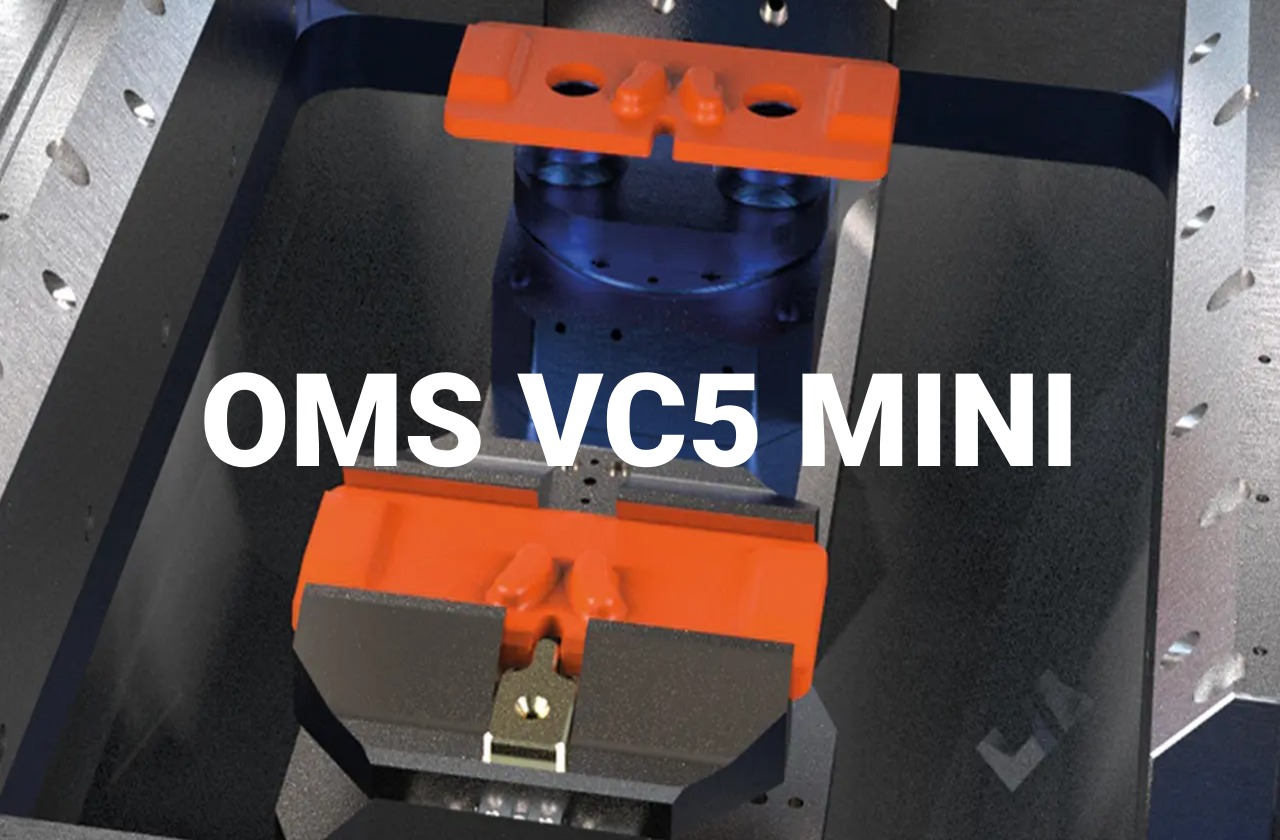
The production landscape of the eyewear sector has changed significantly, moving away from the mass production model typical of past decades to embrace a model based on agility.
The current market no longer requires batches of fifty thousand or one hundred thousand pieces, but demands the ability to produce samples, prototypes and small series quickly. It is from this need that the OMS project was born: a solution developed to offer operators in the sector compact, high-performance and modular tools, providing a concrete response to the need for streamlined and efficient daily production.
Production Agility and Absolute Precision
VC5 mini is designed to eliminate one of the main critical issues of small series production: the impact of tooling costs. The technology developed allows prototyping and limited production to be approached in an economically sustainable way, freeing operators from burdens that traditionally hindered flexibility.
A cornerstone of the project is consistent and repeatable precision over time. The guarantee that a component milled today will maintain the same, identical characteristics as one produced months later is a non-negotiable requirement. This eliminates the uncertainties arising from faulty or variable equipment, ensuring a consistently high standard of quality, which is fundamental to the credibility of the final product on the market.
Modular Platform
The most distinctive innovation of the VC5 mini is its modular architecture. The system is not designed as a monolithic unit dedicated to a single operation, but rather as a versatile platform for production. Created primarily for milling fronts, the machine is designed to accommodate and manage different equipment through a quick and efficient changeover system. This feature allows the system to be reconfigured for different processes, such as the production of templates or the execution of specific reworking on particular pieces, without any loss of precision. In fact, the operator has the functionality of multiple machines concentrated in a single, compact workstation, with obvious advantages in terms of space and investment optimisation.
Operating procedures
To meet the various needs of the production flow, the OMS solution is divided into two operating levels:
Manual Level: Mainly intended for the prototyping phase, it allows the operator direct and immediate control for the creation and fine-tuning of new models.
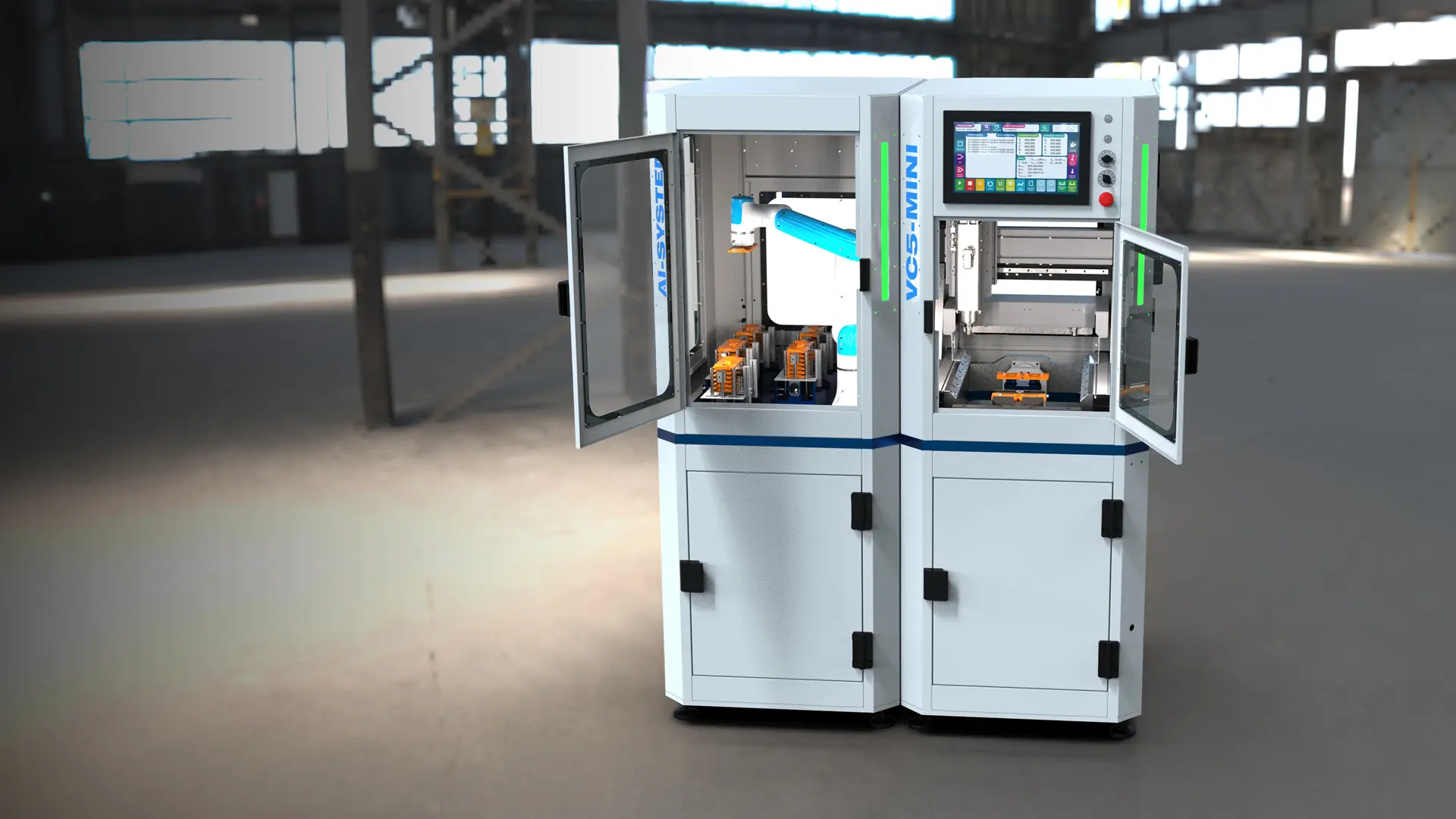
Automated Level: By integrating a loading module and a collaborative robot, the system is transformed into an autonomous production cell, capable of operating continuously for small series, managing loaders of up to 50-60 pieces.
The strength of this automation lies in its ability to produce different models in sequence, drawing from a digital database, without requiring machine downtime. This approach overcomes the limitations of traditional systems based on tools such as expandable tegolini, an unstable method that introduces misalignments and inefficiencies with each change. OMS technology, on the other hand, eliminates the need for dedicated tooling for each individual model, once again maximising efficiency.
Worktop
-
Made of milled and stabilised aluminium
-
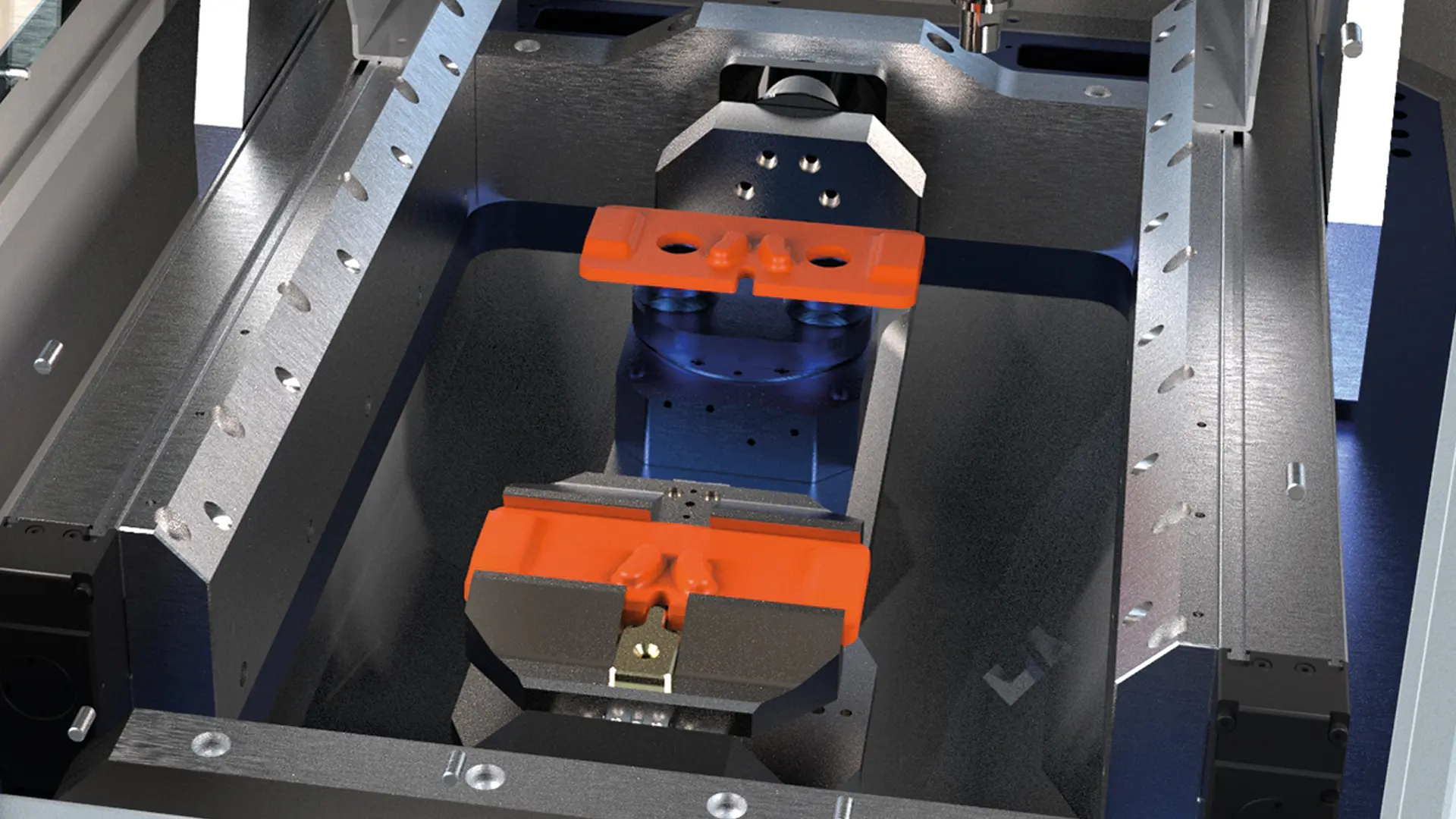
Automatic/pneumatic manual workpiece clamping system
-
Available accessories: custom-designed clamps
High-power electric spindle
-
Power 2,2 kW
-
Speed 30.000 rpm
-
ISO 20 connection
Automatic tool change
-
16 tool positions
-
Tool length measurement presetting
Transmission and structure
-
Structure in milled aluminium
-
Brushless motors and torque motors for rotary axes
-
High-precision recirculating ball guides
-
High-precision recirculating ball screw feeds
Automatic loading / unloading
-
Possible loading/unloading and handling/rotation of parts using anthropomorphic robots
Safety and ergonomics
-
Protective cabin open on 4 sides
-
Impact-resistant steel and Lexan doors
-
Electric locks with interlock for maximum operator safety
CNC system
-
Smart operator interface for easy management, even for less experienced operators
-
High-performance numerical control for exceptional management (interpolation) of the 5 axes
Suction hood
-
The chip tray can be connected to a centralised extraction system.
Accessories range
-
Availability of various types of clamps, brackets and supports, designed directly by our technical department and manufactured in our factory to offer a fast, high-quality service.
INTERVIEW
Luigi, today we're talking about OMS's new VC5 Mini 5-axis machine.
What are its distinctive features?
The main features are its compact size, high-performance axes in terms of response and precision, and remarkable structural rigidity despite its small size. But the key point we focused on is ease of use: the machine is extremely user-friendly, designed to allow even the least experienced users to create a finished product in the simplest way possible.
Let's talk about the dimensions.
How compact is it?
The machine measures 72 cm wide by 98 cm deep and is 1.90 m high. These dimensions allow it to pass through the normal doors of a workshop or shop.
It is equipped with self-levelling wheels that lock once in position, so it can be easily moved from room to room.
So an optician can produce even a single frame on request.
How is the process managed for those who are not CNC programmers?
Exactly. The goal is to simplify life for those who use it. For more experienced users who already have CAM software, the machine can be used as a normal machining centre. For opticians or beginners, however, we offer an option with a library of ready-made, pre-loaded models.
We can also supply specific equipment, so that the user's only task is to choose the right programme and start it, without having to worry about technical aspects that are not their job. The graphical interface was developed entirely by us and resembles that of a smartphone: it is simple, intuitive and contains only the essentials, avoiding the complexity of traditional numerical controls.
Small machines are often seen as modelling tools.
What is the quality of the final product that comes out of the VC5 Mini?
This is not a modelling machine, but a real production machine with a very high quality standard. The biggest challenge was to concentrate all the machining operations and a high degree of rigidity into such a small space. The structure is very solid to eliminate vibrations, and the components for moving the axes are the same as those we use on our larger production machines.
This is directly reflected in the high quality of the finish of the glasses.
What are the concrete advantages of a 5-axis machine over a 3-axis machine?
It offers enormous advantages in terms of both quality and speed. Working with 5 axes, the tool operates alongside the piece rather than copying it, achieving much higher quality results. In addition, there is a significant reduction in execution times.
Apart from fronts, what else can it produce?
And can it be upgraded in the future?
The machine is very versatile. It can produce presentation lenses, faceted and decorated lenses, frames and, with specific equipment, even arms. Changing the equipment to switch from fronts to arms is very quick, taking about two minutes. The most important feature is that each machine is already set up for future implementations. At a later stage, even after purchase, it can be integrated with an automatic warehouse and a loading/unloading robot.
Does this mean that it can become an autonomous production cell?
Yes, with this implementation, it becomes a fully-fledged production machine. The warehouse can hold 45 to 50 pieces and, thanks to the equipment we have designed, it can produce 45 models, all different from each other, without the need for physical tooling between one piece and another. Just launch the programmes and the machine can work autonomously, even at night, without the intervention of an operator.
Such innovative machinery also requires adequate support.
How do you manage installation and training?
Support is essential. We offer initial training at our headquarters, in a dedicated area, even before the machine is delivered, to give the customer a basic understanding. Subsequently, when the machine is installed at the customer's premises, our technicians carry out all the checks and provide further training to ensure that the customer can use it to its full potential and without any problems.
Finally, when will it be possible to see the VC5 Mini in operation?
The machine will be completed in October and will be officially presented at the Maestro Ottico 2025 event, to be held in Florence.
Feel free to contact us